

By Siddharth Varada
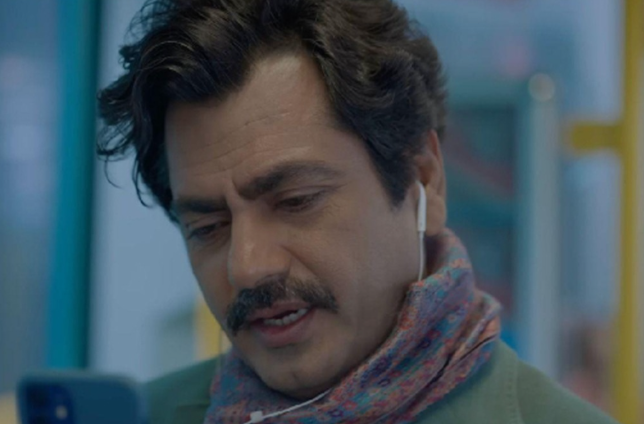
Main Actor Nahin Hoon, directed by Aditya Kriplani, portrays the story of a retired banker Adnan Baig from Frankfurt and a struggling actress Mouni Roy from Mumbai. The film takes us on a journey with these two people as he learns acting from her over video calls. The film is beautifully made without any artifice and the same goes for the performances. The result is a moving experience that is deeply internal, leaving you with a warm feeling.
Adnan and Mouni meet during an audition for a film when Adnan decides to go there to complete his unrealized wish of being an actor. Both have their own regrets and emotional burdens to carry as Mouni agrees to coach him to become a good actor after they are shortlisted. If Adnan is lonely with his posh but isolated existence in Frankfurt, Mouni is someone struggling with the chaos of the Mumbai city and the uncertainty of the film industry. Their bond comes through beautifully on screen despite not sharing the same frame until the last scene.
For the first half-hour or so, I had a constant smile on my face at the irony of Siddiqui’s character Adnan learning the craft of acting from someone. It’s hard to ever imagine him not acting well. The entire process of him learning what it is to act from her is really fascinating to watch. The initial takes he gives on a computer before being asked to tone down the drama really worked for me. It almost seems as if the actor has unlearned his craft to deliberately portray not-so-good acting. One scene where he attempts multiple times to mimic the character of Donald Duck is terrific to watch. From there on, we are fascinated by these two people who we want to know more of the deeper we go.
Adnan, despite being fascinated with the craft of acting, never really had a chance to explore his interest owing to circumstances and choices he made. Mouni is someone who has made clear choices for her passion and yet is frustrated by the lack of validation and success that she feels she deserves. What they envy in each other comes through not in obvious ways but through the training exercises they do together that both fulfil them and make them vulnerable to each other. One particularly beautiful exercise they do is one of disassociation, where they give each other words to process, with the other responding with something seemingly unrelated that comes to mind. This results in raw emotional scenes that blur the lines between reality and performance, making them hard to take your eyes away from.
Siddiqui’s performance is one that isn’t immediately noticeable in the way that Satarupa’s is, and yet it grows on you. Little things like the moments where Adnan praises Mouni for her performance on call work so beautifully as though they have touched his soul. There’s a scene where he honestly reveals what he misses with his daughter currently and imagines what he would do with an imaginary daughter named Gayathri that’s incredibly moving. Satarupa’s performance stands out from her first scene where she sits with her friends, visibly unhappy with her life. Her audition scene, where she mourns her loneliness during the take, is instantly moving because of how vulnerable she allows herself to be. Her best scene probably comes later though, when she breaks down while recollecting her childhood incident of a report card discussion with her mother. It’s a scene so raw that she’s forced to admit to Adnan that she never used this pain for a performance, feeling that it wasn’t a healthy way to act.
The film ultimately is about the control Mouni has over their relationship, owing to her training as an actor. She’s able to dictate how the training will go. She makes him be vulnerable through the exercises while maintaining a degree of nonchalance about it all. He starts in a similar way but soon learns to let go of his fears while she cleverly keeps them hidden through her craft for the most part. This control she has over him feels like a compensation for the lack of control in her own life. She learns to give up control while he learns to take it back, leading to both probably never being the same people again.
Show quoted text